Sep 8, 2026Cold Chain Guides
Thin and Powerful: EV Reefer Units That Don't Sacrifice Cooling
Slimming an EV reefer unit can hurt cooling, but a thin dual-temperature unit can meet -18°C in 46 minutes at 30°C ambient while staying flush-mounted to cut drag.
Anyone specifying a refrigeration unit for an electric reefer truck has run into the same trade-off. A thinner unit means less drag and better range, but thin usually means weaker cooling. Go thicker to gain capacity and the vehicle is back to clearance and aerodynamic problems. The two goals appear to pull in opposite directions.
That tension is one of the reasons EV reefer specification is harder than choosing a unit for a conventional truck. With a diesel vehicle, adding depth to a unit is a modest penalty. On an electric truck, every increase in drag and mass reduces the distance the vehicle can travel, so the unit has to do more work in a smaller physical footprint.
The Weight and Aerodynamics Trade-Off
On an electric vehicle, every added unit of drag arises from the shape of the body and every kilogram of mass comes out of driving range. That makes a compact, light reefer unit attractive. The longstanding assumption, however, is that compactness costs cooling power. When the package is too shallow, the coils are too small, and the unit cannot move enough heat to hold a deep-frozen load. A shallow unit that cannot hold temperature is no saving at all.
Doing More With Less: The 260.5mm Example
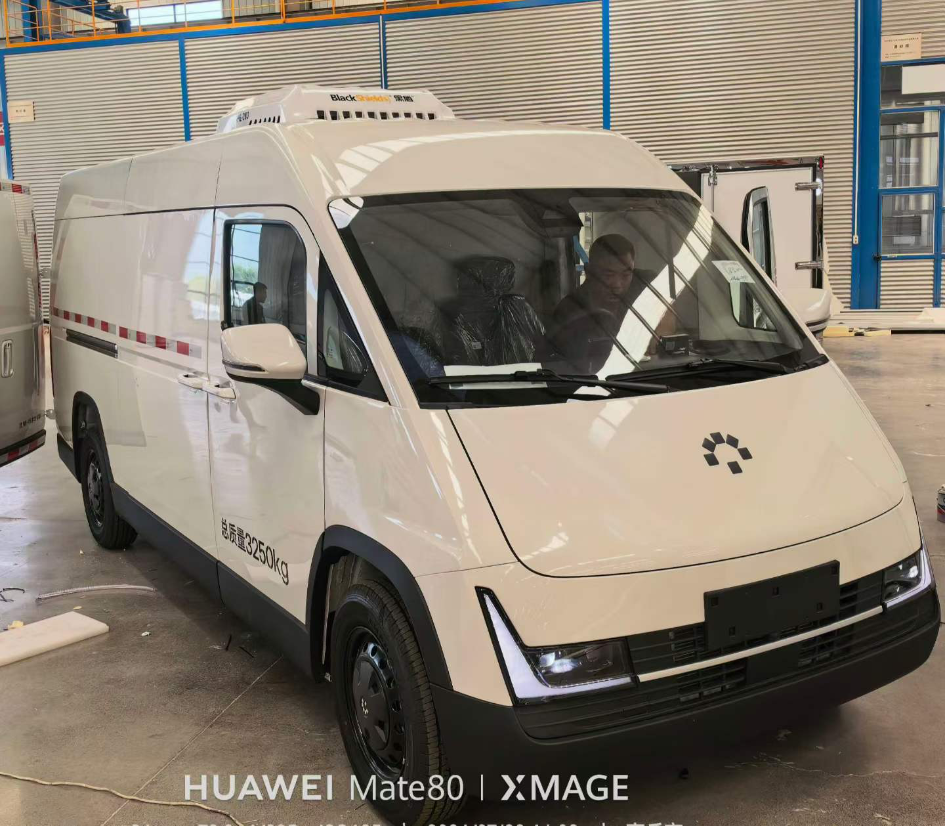
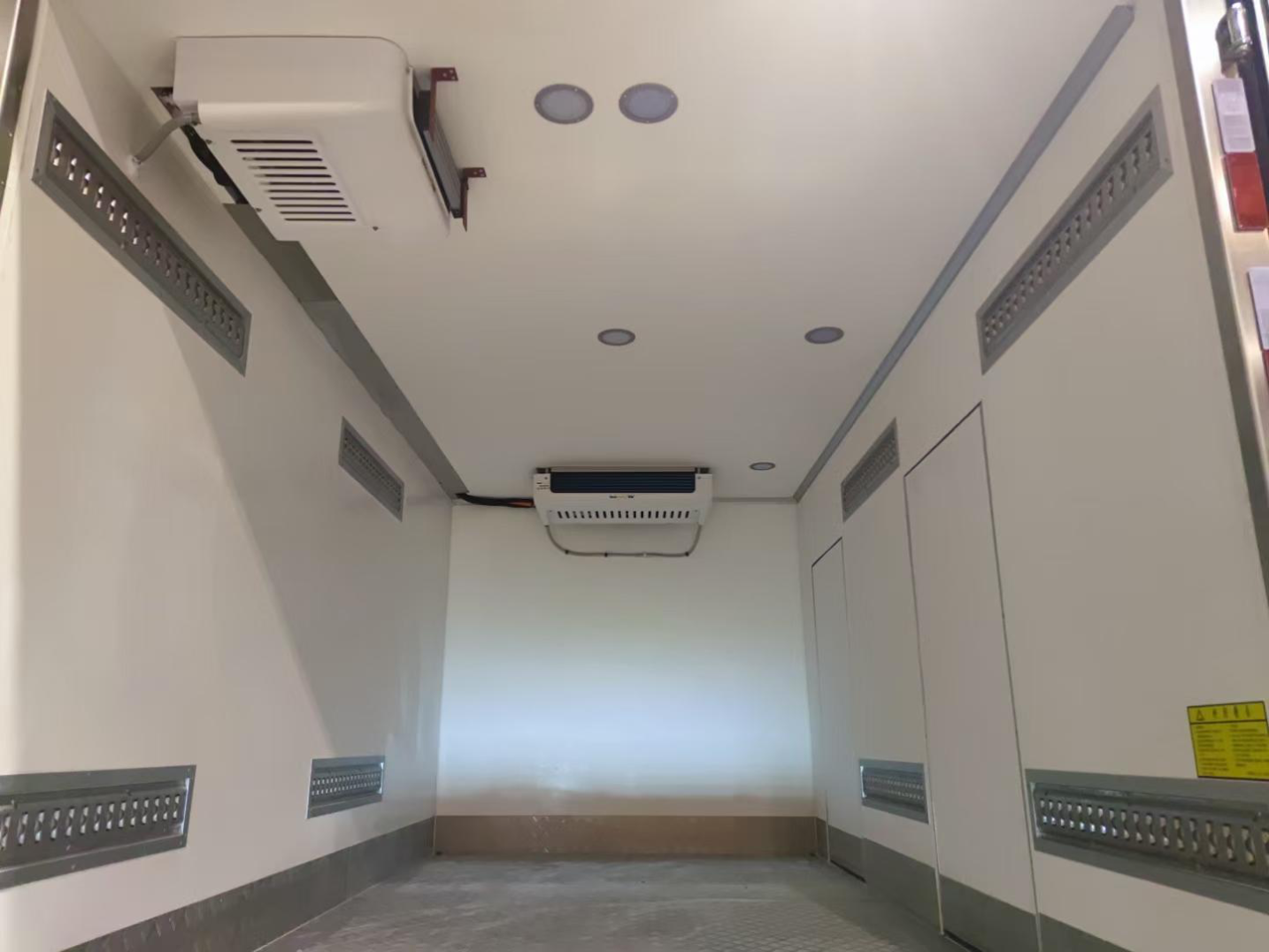
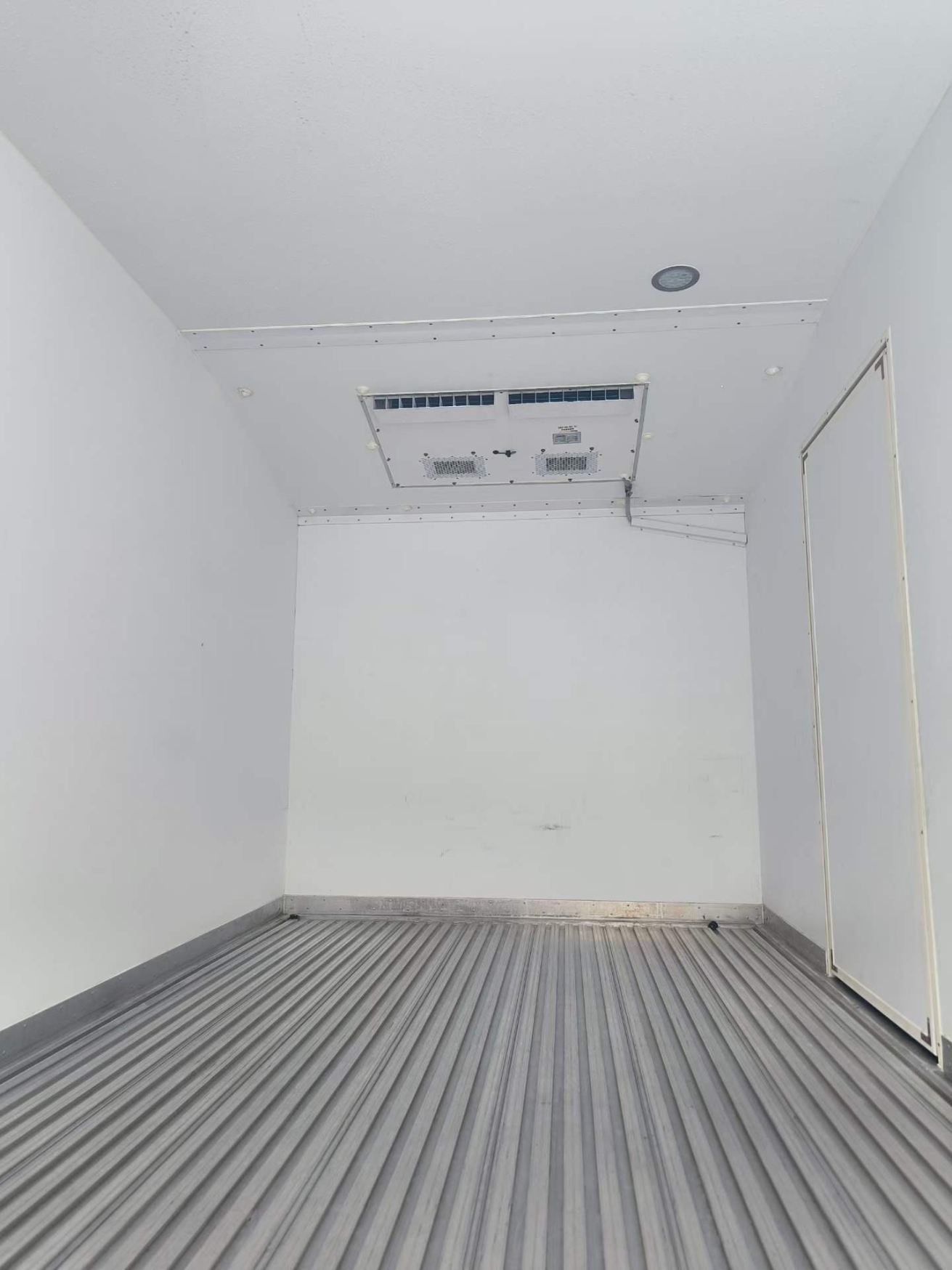
A recent installation shows one way around the problem. A BlackShields unit was built at 260.5mm thick, angled and flush-mounted to the roof of an EV reefer truck, while still reaching -18°C in 46 minutes at 30°C ambient. The result suggests that thin and powerful do not necessarily have to be opposites, provided the airflow path and coil arrangement are engineered for the available depth.
Dual-Zone Operation and Defrost Behaviour
The same unit is also a dual-temperature model, with one system serving two separate temperature zones. That matters for fleets running mixed frozen and chilled loads, because it removes the need to carry two separate units on a single body. A further detail is worth knowing: BlackShields' dual-system alternating defrost keeps one side actively cooling at all times, so cabin temperature does not spike the way it does with a single system in the middle of a defrost cycle.
That detail matters more than it sounds for temperature-sensitive cargo. In a single-system unit, the box stops cooling while the coil defrosts, and the temperature can rise before the system resumes. With alternating defrost, one side keeps working, so the load sees a steadier condition throughout the trip.
For an electric fleet, the combination of slim packaging and continuous cooling is the practical benefit. The unit helps preserve range without surrendering the pull-down performance that temperature-sensitive loads require. For a buyer weighing an electric reefer specification, the question is not simply how thin the unit is, but how much cooling it can still deliver at the installed thickness.