Aug 24, 2026
How to Choose a Transport Refrigeration Unit
Learn how to select a transport refrigeration unit using cargo temperature, body dimensions, insulation, ambient conditions, route profile, power source and installation constraints.
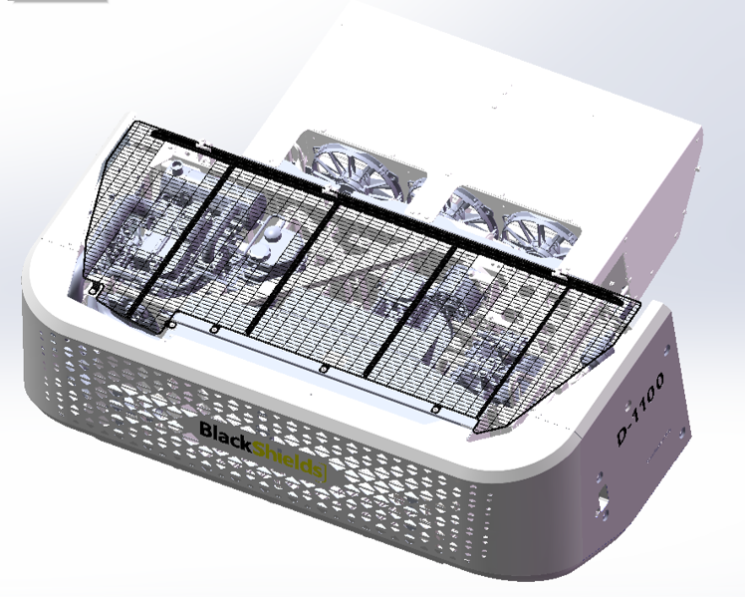
How to Choose a Transport Refrigeration Unit
A transport refrigeration unit should be selected from the vehicle, insulated body, cargo, temperature requirement and operating duty—not from body length or box volume alone. The correct process starts by defining the refrigeration load, then choosing a compatible power architecture and installation layout. Only after those inputs are clear should a buyer compare specific models and capacity data.
This guide is intended for refrigerated body builders, vehicle integrators, TRU distributors and fleet operators who need a defensible preliminary selection before requesting an engineering confirmation.
Start With the Transport Task
The same refrigerated body can impose very different demands on a refrigeration system. A long-haul truck carrying pre-cooled chilled goods may experience relatively stable conditions. A multi-stop frozen-delivery truck of the same volume can admit warm, humid air at every stop and require repeated temperature recovery.
Before comparing equipment, document five basic facts:
- What cargo will be transported?
- At what temperature will the cargo be loaded?
- What temperature must be maintained during transport?
- What is the highest design ambient temperature?
- How will the vehicle actually operate during a route?
These answers define the application. A model name or nominal capacity cannot compensate for an undefined duty cycle.
1. Identify the Vehicle and Power Architecture
The vehicle determines which refrigeration architectures can be integrated safely and practically.
Direct-drive units
A direct-drive TRU normally uses a compressor driven by the vehicle engine. This architecture is common on vans and light- to medium-duty refrigerated trucks. It can provide a compact system, but cooling operation depends on the vehicle and compressor-drive arrangement. The body builder must confirm compressor displacement, bracket and belt layout, engine compatibility, hose routing and idle-operation requirements.
Electric units
An electric TRU uses electrical power rather than a mechanically driven compressor. Selection requires more than a voltage label. The integrator must confirm voltage range, continuous and peak power, protection, cabling, connectors, controls, thermal limits and the energy available over the route. For an EV, the refrigeration duty becomes part of the vehicle energy budget.
Self-powered units
A self-powered unit carries an independent power source for refrigeration. This can suit larger bodies, long operating hours or applications where cooling must not depend on the truck engine. The trade-offs include additional weight, packaging, fuel and maintenance requirements.
Do not choose the architecture in isolation. Match it to vehicle size, operating hours, route pattern, available energy, local service capability and required independence from the vehicle engine.
2. Record the Refrigerated Body Correctly
Provide internal body dimensions—length, width and height—not only an external body length. Calculate internal volume, but treat it as one input rather than the final sizing rule.
Also record:
- Insulation material and thickness
- Floor, roof, wall and door construction
- Age and condition of the body
- Door size and sealing condition
- Number of compartments and bulkheads
- Evaporator location and required airflow path
- Expected solar exposure and body color where relevant
Heat passes through every part of the body envelope. A well-built body with effective door seals creates a different load from a body of equal volume with thermal bridges, damaged insulation or frequent leakage.
3. Define Cargo and Temperature Conditions
Cargo information must include both the required transport setpoint and the loading temperature.
Transport refrigeration is generally selected to maintain cargo within its required carriage-temperature range while removing heat that enters during operation. It may cool compartment air and recover after door openings. Cooling a substantial mass of warm product to its required carriage temperature is a separate pull-down load and may exceed the intended duty of a unit sized mainly for temperature maintenance.
State clearly whether the application involves:
- Pre-cooled chilled cargo
- Pre-frozen cargo
- Warm product requiring pull-down
- Fresh produce with product respiration
- Mixed cargo or multiple temperature zones
- Sensitive pharmaceuticals or another tightly controlled load
If pull-down is required, provide product type, mass, initial temperature, target temperature and permitted pull-down time. Do not assume a standard transport unit can replace warehouse pre-cooling.
4. Use the Real Ambient Design Condition
Maximum ambient temperature affects both heat gain through the body and the refrigeration system's ability to reject heat. The relevant value is the design condition for the route and installation—not an annual average.
High solar exposure, low vehicle speed, restricted condenser clearance, hot-road radiation and recirculation of condenser discharge air can make the installed condition more demanding than an open-air catalog comparison.
When comparing published cooling capacities, always verify:
- Ambient temperature at the rating point
- Return-air or box temperature
- Test standard or stated test condition
- Compressor speed or power condition, where applicable
- Whether the figure represents cooling or standby operation
A capacity quoted at a 0°C box temperature must not be treated as equivalent to a capacity quoted at -20°C. Likewise, a value measured at one ambient condition should not be extrapolated casually to a hotter market.
5. Describe Door Openings and Route Pattern
Door openings introduce warm air and moisture. The resulting load depends on door area, open time, temperature difference, humidity, wind and how often the event occurs.
Document:
- Route duration
- Number of stops
- Typical door-open time
- Full-door or side-door use
- Strip curtains, air curtains or compartment doors
- Time spent parked with the vehicle engine off
- Overnight or shore-power requirements
A unit that performs adequately on a closed-body highway route may recover too slowly on a dense urban delivery cycle. Operational controls can be as important as nominal unit size.
6. Confirm the Mounting Position
The condenser and evaporator must fit the vehicle without compromising airflow, body strength, legal envelope, maintenance access or other installed equipment.
Common arrangements include roof-, front- and under-mount systems. The body builder should check:
- Available installation envelope
- Structural support and mounting loads
- Condenser inlet and discharge clearance
- Exposure to road splash, debris and impact
- Cab tilt, doors, aerodynamic devices and body accessories
- Hose and cable routing
- Evaporator throw and return-air path
- Drainage and defrost-water management
- Access for filters, fans, electrical components and service tools
The most compact arrangement on a drawing is not necessarily the easiest system to service over its working life.
7. Specify Required Functions
Optional functions should be defined before quotation. They may affect equipment selection, electrical demand, installation and controls.
Possible requirements include:
- Electric standby
- Heating
- Multi-temperature operation
- Multiple evaporators
- Remote monitoring or telematics
- Data recording
- Specific controller or communication interfaces
- Special corrosion or environmental protection
Availability is model- and configuration-dependent. Do not assume an option shown for one unit is standard across a complete product family.
A Practical Selection Framework
Use the following sequence:
- Define cargo, loading temperature and target setpoint.
- Record internal body dimensions and insulation construction.
- Establish the design ambient temperature.
- Describe the route, stops and door-opening pattern.
- Identify vehicle type, powertrain and available energy.
- Establish whether engine-independent operation is required.
- Confirm condenser and evaporator mounting constraints.
- List standby, heating, multi-temperature and control requirements.
- Calculate or review the refrigeration load.
- Compare manufacturer capacities at relevant test conditions.
- Confirm installation interfaces and service access.
- Obtain final model approval from the unit manufacturer or responsible refrigeration engineer.
Common Selection Mistakes
- Choosing only from box volume or vehicle length
- Comparing capacities measured at different box temperatures
- Ignoring loading temperature and product pull-down
- Using average climate data instead of the design maximum
- Failing to quantify door-opening frequency
- Selecting a power architecture before checking the vehicle interface
- Restricting condenser airflow with body accessories
- Placing the evaporator where the load blocks supply or return air
- Assuming standby, heating or multi-temperature capability is standard
- Ordering before compressor, electrical and mounting compatibility are confirmed
BlackShields Application Context
BlackShields manufactures direct-drive, full-electric and self-powered transport refrigeration units in multiple installation formats. A preliminary family selection can be made from the application data above, but a final model and configuration should be confirmed against verified technical data and installation requirements.
FAQ
Can I select a truck refrigeration unit only by box volume?
No. Box volume is useful for initial screening, but insulation, cargo, setpoint, ambient temperature, door openings, loading temperature and route pattern can materially change the required capacity.
Should I choose the largest available TRU?
Not automatically. An undersized unit can struggle under peak load, while unnecessary oversizing may add cost, weight, energy demand and installation complexity. The objective is adequate capacity and recovery margin for the defined duty.
Can a transport refrigeration unit cool warm cargo?
It can remove some cargo heat if the system is sized for that load, but cooling a large mass of warm product is different from maintaining pre-cooled cargo. State the required pull-down duty explicitly and confirm whether pre-cooling is necessary.
What information is needed for preliminary matching?
Provide the vehicle, internal body length × width × height, insulation, cargo, loading temperature, target temperature, maximum ambient temperature, route duration, stops, door openings, powertrain and preferred mounting position.
Request a Preliminary TRU Review
Send BlackShields your vehicle type, body L × W × H, insulation, cargo and loading temperature, target temperature, maximum ambient temperature, route pattern and available power source. BlackShields can make a preliminary configuration recommendation; final model approval remains subject to engineering verification.